

- All
- Product Management
- News and Information
- Introduction Content
- Corporate Outlets
- Frequently Asked Questions
- Corporate Video
- Corporate Album

SAAS Service Platform
1. System Overview
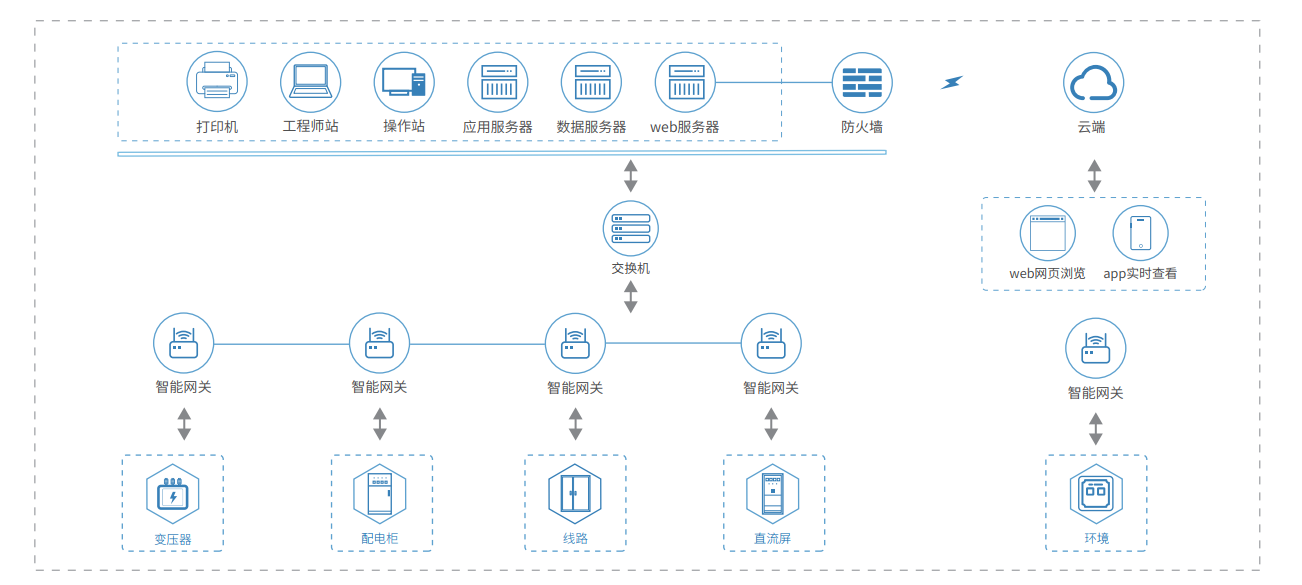
The Intelligent Electric Room Power Monitoring System is a technical system used for monitoring, controlling, and managing power systems. It achieves comprehensive monitoring and remote control by real-time monitoring of the operating status of the power system, including parameters such as voltage, current, and power. Users can monitor the system status at any time, detect problems, and handle them, improving system reliability and safety. The system also supports data collection, analysis, and report generation, providing support for decision-making and management. It is an important tool for improving the operational efficiency and reliability of power systems.
2. System Functions
Real-time Monitoring
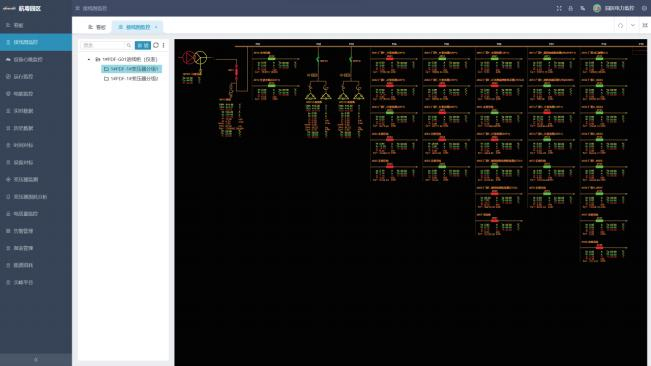
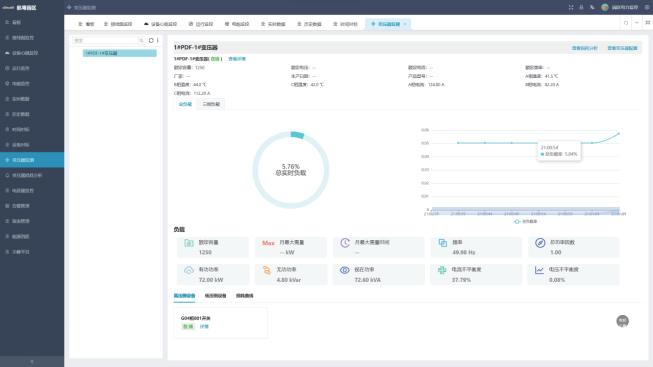
Real-time monitoring of intelligent power monitoring meters, low-voltage circuit breakers with intelligent interfaces, microcomputer integrated relay protection devices, transformers, temperature controllers, DC screens, and other related data.
Remote Control Locking
Using remote communication technology to achieve remote switch control operations of power equipment, ensuring that multiple devices cannot be operated simultaneously or improperly in certain situations, preventing dangerous conditions such as equipment short circuits and overloads.
AI Learning
Utilizing artificial intelligence large models to learn the operating parameters of bus ducts, transformers, and switch cabinets, pushing equipment health status and fault prediction criteria to edge gateways for real-time prediction and early warning to avoid equipment failures.
Alarm, Fault, and Event Management
The system provides a comprehensive event alarm code library, multiple alarm methods across platforms, supporting direct device alarms, AI prediction alarms, sudden condition change alarms, statistical indicator limit alarms, and other types of alarms.
Operation Monitoring and Analysis
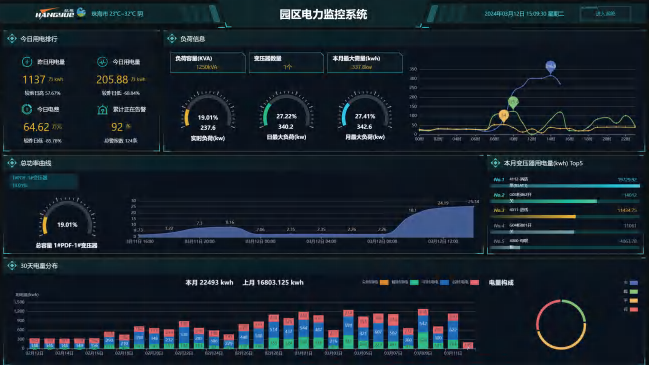
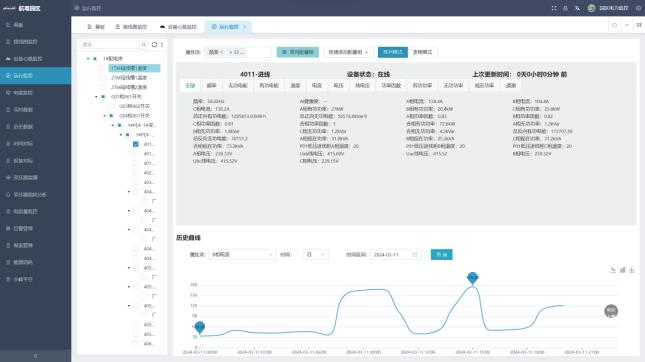
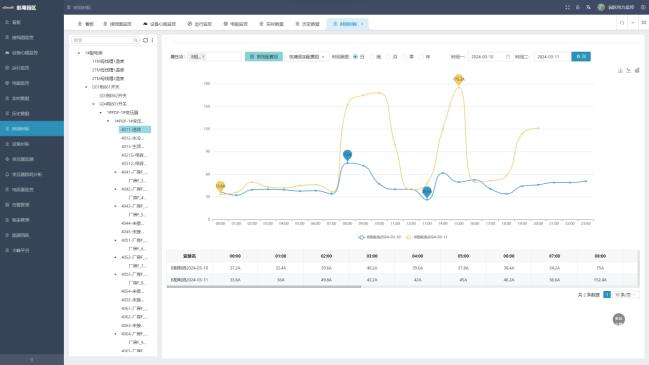
Real-time values, real-time status, and real-time curves of field protection and instruments; historical values, historical charts, template queries, and arbitrary period data queries; all support curve, pie chart, and bar chart analysis.
Operational Statistical Analysis
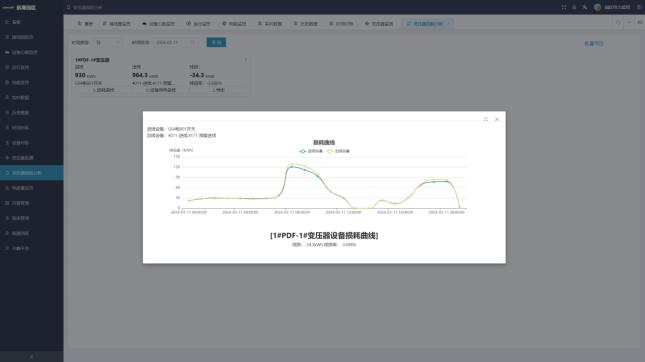
Analysis of power operation data such as voltage, current, and load; statistics on the number of operations of devices like circuit breakers and disconnect switches; supports comparative analysis of the same device over different time periods and different devices over the same time period.
Power Quality Analysis
By real-time monitoring and recording data such as odd and even harmonic content and voltage distortion rate of equipment operation, it provides diagnostic reference data for the energy quality of each device, thereby offering directions and basis for improving equipment energy quality and targeted maintenance.
Demand Analysis
Monitoring user electricity information, calculating and monitoring the maximum demand in real time.
Report Management
The system provides standard daily, weekly, monthly, quarterly, and annual operation report templates, customizable reports according to needs, and supports querying and printing all recorded data values and statistical indicators.
 |
 |
 |
 |
 |
 |
3. Customer Value
Improving Power Supply Reliability and Safety: Real-time collection and monitoring of power equipment operating status, using artificial intelligence for equipment health management and fault prediction, intelligent early warning and forecasting to prevent equipment failures, ensuring safe and stable operation of the power system, and protecting users and equipment.
Reducing Energy Consumption Costs: Monitoring and managing electrical equipment to achieve refined control of power consumption, effectively reducing energy costs and improving energy efficiency.
Enhancing Equipment Operation Efficiency: Real-time monitoring and analysis of equipment operation to help users promptly detect abnormal operation, perform fault diagnosis and maintenance, and improve equipment operation efficiency and lifespan.
Improving Operational Efficiency: Achieving remote monitoring and management of power equipment, facilitating remote operation and control for users, improving operational efficiency, and reducing labor costs.
Achieving Visual Management: Through big data computing and rich analysis components, tools, and charts, achieving visual management to provide users with more intuitive and convenient services, enhancing user experience.
Hierarchical authorization, safer data, and more reliable system.

Hangyue Smart Official Account
Power Monitoring System APP
COPYRIGHT 2025 Hangyue Intelligent Electrical Co., Ltd.